
A sculpture can completely change the personality of an interior.
Unlike a painting that stays on a wall, a sculpture occupies physical space. It adds height, texture, movement and a strong visual focal point. The right sculpture can make a living room feel more sophisticated, give an office lobby a memorable identity, or add a luxurious finishing touch to a high-end interior.
But choosing a beautiful sculpture is only half the job. Where you place it, how you light it and what you place around it can make an equally important difference.
For homes, corporate offices, hotels and luxury properties across Saudi Arabia, sculpture styling is increasingly becoming an important part of interior design. From contemporary metal sculptures to handcrafted marble and abstract forms, there are many ways to use three-dimensional artwork without making a space feel crowded.
In this guide, we’ll explore practical ways to style sculptures in living rooms, offices and luxury interiors.
Sculptures bring something to an interior that other decorative elements often cannot.
They create a sense of depth and dimension while giving the eye something interesting to explore. A well-selected piece can also communicate the personality of a space.
Here are some of the main reasons designers use sculptures:
The key is balance. A sculpture should feel like part of the space rather than an object that was simply placed there at the last minute.
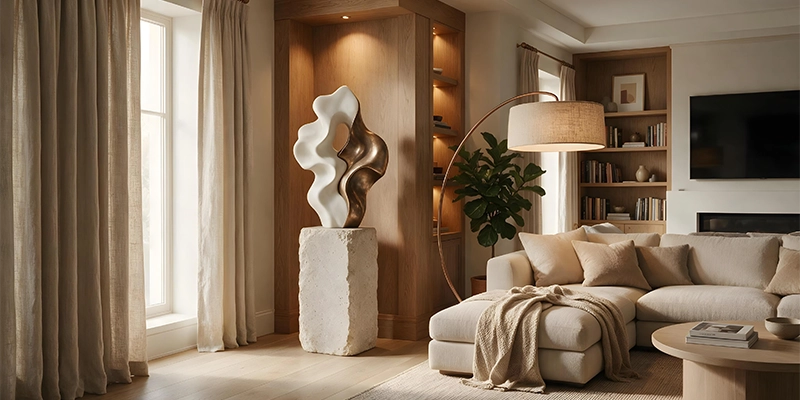
The living room is one of the easiest places to introduce sculpture because there are several opportunities for placement.
Choose one statement sculpture and allow it to become the visual centre of the room.
A large abstract sculpture can work particularly well beside a sofa, near a feature wall or in an open corner.
If the sculpture is visually dramatic, keep the surrounding décor relatively simple. Too many decorative objects competing for attention can reduce its impact.
An empty corner doesn’t necessarily need another chair or table.
A tall sculpture can transform an unused corner into an intentional design feature. This works especially well in spacious villas and modern homes where large areas can otherwise feel unfinished.
Consider:
For a polished appearance, place the sculpture on a suitable pedestal or platform when its design and proportions allow it.
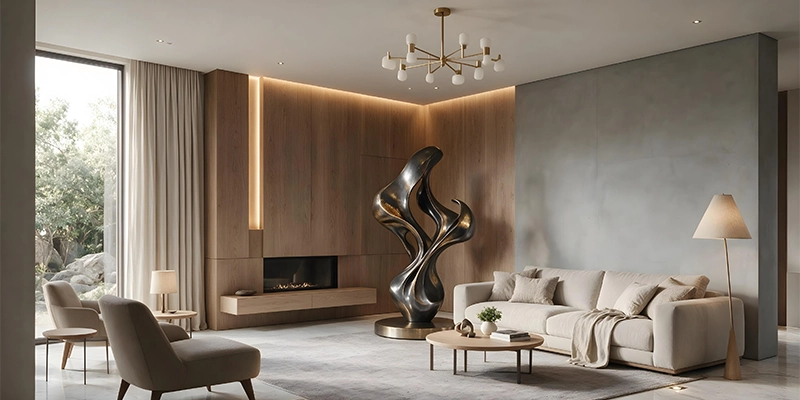
Smaller sculptures are ideal for console tables, sideboards and entryway furniture.
For example, a sculptural object can be placed on a console behind a sofa and combined with:
Avoid filling every inch of the surface. Leaving negative space around the sculpture helps it stand out.
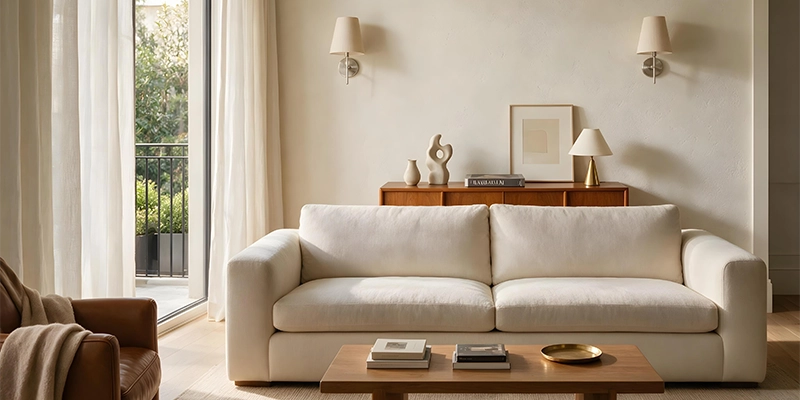
Look at the materials already present in your living room.
If the room includes marble flooring, stone surfaces and neutral furniture, a marble or metallic sculpture may create a cohesive look.
For interiors with warm wood, leather and earthy tones, wooden or bronze sculptures can introduce additional warmth.
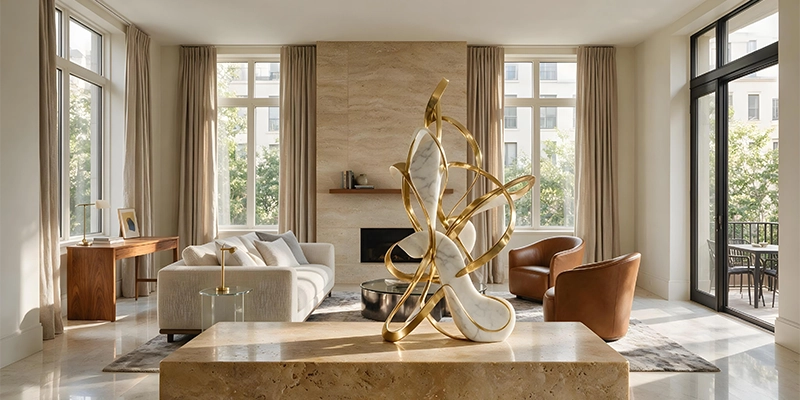
Office sculpture styling requires a slightly different approach.
The objective isn’t only decoration. Artwork can help communicate a company’s identity, values and level of sophistication.
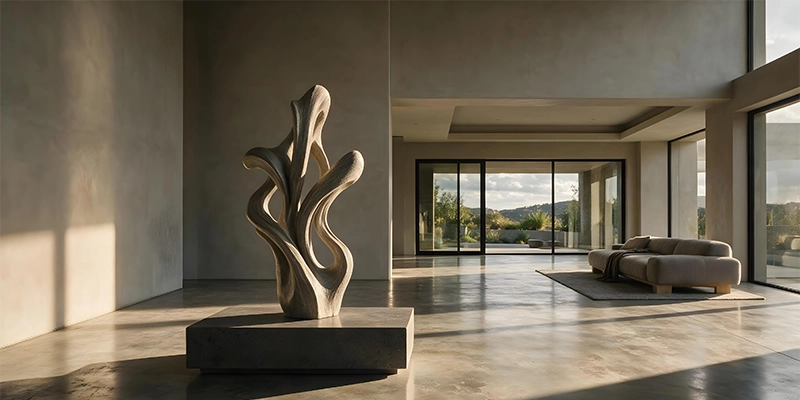
The reception area is often the first thing visitors see.
A statement sculpture behind or beside the reception desk can create an immediate visual impression.
For corporate environments, consider:
The sculpture should complement the company’s branding and the architectural language of the office.
A waiting area can sometimes feel functional rather than inspiring.
Adding a carefully selected sculpture can make the environment feel more refined without requiring significant changes to the furniture.
Place a medium-sized sculpture near a seating arrangement while keeping enough open space for movement.
A financial company, technology business, hotel group and creative agency may all want very different visual identities.
For example, a technology company may prefer clean geometric forms, while a luxury hospitality brand might choose a more organic or artistic sculpture.
Custom sculpture can be especially useful when a business wants artwork that reflects its own identity rather than using a generic decorative piece.
Luxury interiors usually benefit from restraint.
The goal isn’t to fill the room with expensive objects. Instead, select fewer pieces and give each one enough space to make an impression.
One exceptional sculpture can have more impact than several small decorative pieces.
For luxury villas, penthouses, hotels and premium commercial spaces, consider materials such as:
The material should work naturally with the architecture and existing finishes.
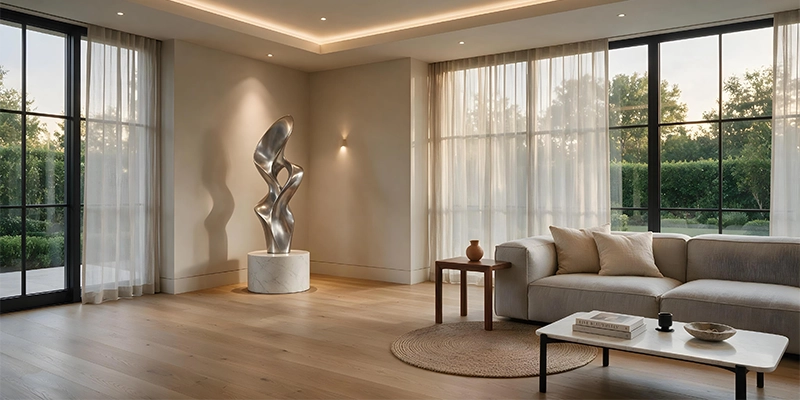
Use Scale to Create Drama
Large rooms require artwork that can visually hold its own.
A small sculpture may disappear inside a double-height lobby or expansive living room. A large-scale sculpture, on the other hand, can create a powerful focal point.
Before purchasing, measure:
Good proportions are essential for a luxury appearance.
One of the most overlooked elements of sculpture styling is negative space.
A sculpture doesn’t need to be surrounded by decorations.
Giving the artwork breathing room allows its shape, shadows and texture to become more noticeable.
For example, instead of placing three decorative objects around a statement sculpture, consider leaving the surrounding area almost completely empty.
This approach works particularly well in minimalist and luxury interiors.
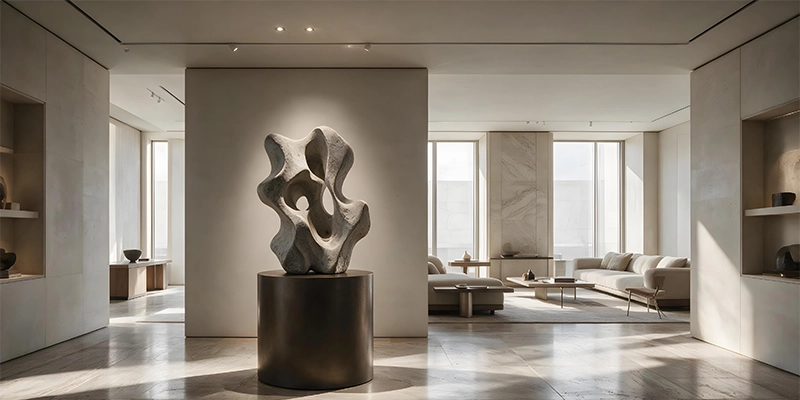
Lighting Makes a Huge Difference
Even a beautiful sculpture can lose its impact under poor lighting.
Lighting should highlight the sculpture without creating distracting glare or harsh shadows.
A focused spotlight can draw attention to a sculpture and create depth.
For metallic sculptures, pay attention to reflections. Stainless steel and polished brass can react strongly to direct lighting, so the position and intensity of the light should be carefully considered.
Recessed ceiling lights, wall washers and concealed LED lighting can help integrate sculptures naturally into modern interiors.
For luxury projects, lighting can be planned together with the sculpture placement during the interior design stage.
The material influences both appearance and atmosphere.
Bronze offers a timeless and sophisticated appearance. It can work beautifully in luxury residences, hotels, corporate spaces and traditional-modern interiors.
Stainless steel is ideal for contemporary spaces. Its clean surface and reflective quality can complement modern architecture and minimalist interiors.
Marble introduces natural elegance and works particularly well in luxury villas, hotels and high-end interiors.
Corten steel has a distinctive weathered appearance and can be particularly effective in outdoor spaces or interiors inspired by natural materials.
Fiberglass provides flexibility for custom shapes, large-scale designs and contemporary installations.
Wood introduces warmth and organic texture. It can soften minimalist spaces and work especially well with natural materials.
You don’t necessarily have to choose between sculpture and wall art.
Both can work together when their visual weight is balanced.
For example, a large abstract painting can be paired with a smaller sculpture positioned nearby. Alternatively, a statement sculpture can stand independently while the surrounding walls remain relatively minimal.
The important thing is to avoid creating too many competing focal points.
If you are planning a complete art collection, explore Art Smiley’s art marketplace for artwork that can complement your interior design concept.
Even expensive artwork can look out of place if it isn’t styled correctly.
A tiny sculpture can disappear in a large room, while an oversized piece can overwhelm a small space.
Always leave comfortable walking space around floor sculptures, particularly in offices, hotels and commercial environments.
Multiple sculptures aren’t always better. Give statement pieces enough visual breathing room.
A poorly lit sculpture may lose much of its visual impact.
A room containing classical furniture, industrial sculpture, colourful contemporary art and unrelated decorative objects can quickly feel disconnected.
Choose a clear design direction and build around it.
Interior design in Saudi Arabia often combines modern architecture with luxurious materials, cultural influences and spacious layouts.
This creates excellent opportunities for sculpture.
In Riyadh, Jeddah and other major Saudi cities, sculptures can be used in villas, corporate offices, hotels, restaurants, commercial buildings and public spaces.
For larger projects, custom sculptures can be designed according to:
If you’re planning a commercial or residential art project, professional sculpture services in Saudi Arabia can help turn an interior concept into a finished artwork.
Before buying a sculpture, ask yourself a few simple questions:
What is the purpose of the sculpture?
Is it meant to be a statement piece, fill an empty corner or complement existing artwork?
How much space do you have?
Measure the area before choosing the size.
What style is your interior?
Modern, minimalist, classic, industrial and luxury interiors may require completely different sculpture styles.
Which material fits the room?
Consider existing flooring, furniture, lighting and architectural finishes.
Will the sculpture be indoors or outdoors?
Material selection becomes especially important for outdoor installations.
How will it be lit?
Think about lighting before finalising the placement.
Styling sculptures is less about following strict decorating rules and more about understanding balance, scale, material and space.
Whether you’re decorating a family living room, designing a corporate reception area or creating a luxury hotel interior, the right sculpture can become much more than decoration. It can give the entire space a stronger identity.
Start with the architecture and existing décor, choose a sculpture that complements the environment, and give the artwork enough space to stand on its own.
For larger residential, hospitality and corporate projects, custom sculpture design can take the concept even further—creating a piece that feels like it was made specifically for the space.
Abstract, contemporary, marble, wooden and metallic sculptures can all work well in living rooms. The best choice depends on the room’s size, furniture, colour palette and overall interior style.
Popular locations include empty corners, beside sofas, near feature walls, on consoles and in open areas where the sculpture can become a focal point.
Yes. Sculptures can make reception areas, meeting spaces and waiting areas more distinctive while helping communicate a company’s personality and brand identity.
Bronze, brass, marble, stainless steel, wood and high-quality fiberglass are popular choices for luxury interiors. The right material depends on the architecture and desired aesthetic.
Give it enough negative space, use appropriate accent lighting and avoid surrounding it with too many competing decorative objects.
Yes. Custom sculptures can be designed around the dimensions, theme, materials, branding and architectural requirements of residential, hospitality and commercial projects.